







Video Transcript
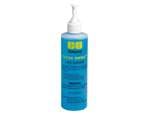
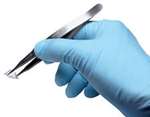
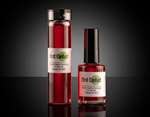
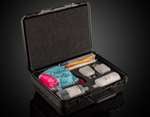
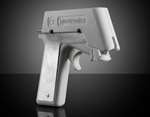
Hi, I’m Dan Hamilton with Photonic Cleaning Technologies and I’m here today to talk about first contact polymer, the cleaning and protecting solution for optics and mirrors. It’s a one-part, easy to use liquid polymer that you apply to the surface, let dry and then remove once you’re ready to use your optic. The demo today is going to just demonstrate how to use the polymer and how to remove it after storage or shipping. The way to apply it is you just pour a generous amount on the surface, spread it gently with the brush. You just want to get to the edges, you’re not agitating. The brush is not touching the surface so there is no risk of scratching, and then once it’s applied you just leave it to dry. In about ten minutes or so, the polymer will be dried, and you can store it, ship it or remove it if you’re just trying to clean your optics. For larger optics, it’s a lot easier to apply first contact polymer with a larger brush that you can get. You apply the polymer to the surface, you pour it on and then spread it out. First contact polymer can also be applied to vertical optics. Here, I have an optic mounted vertically and I have put a little piece of paper on the base just in case I drip. I’m just going to take my bottle of first contact polymer, dip the brush inside and then gently brush it on the surface. One way to remove first contact polymer is with the included peel tabs. Here, I have half of a peel tab I tore off of the 30 that come with the kit. I’m just going to remove it from the paper, apply it to the surface, just gently press it down, and then just peel the polymer off in one pull. There are many ways to remove first contact polymer. One of the easiest is using a mesh embedded. I have my optic already coated with polymer and it’s partially dry. What I’m going to do next is lay the mesh on the edge of the surface and apply a thin layer, a few drops of polymer, on top of the mesh so that it becomes embedded in the polymer coating that’s already on the optic. Another way to remove first contact polymer is to embed unwaxed dental floss in the surface. This optic is a mounted optic and because of that, the polymer will run to the edges and can be harder to remove unless you apply the polymer thicker. Because it’s thicker, it takes longer to dry, and the best way to determine if it’s dry is to do a smell test. If you can smell the solvents on the surface, it is not yet dry. Once it’s dry, you can just pull the floss, anywhere from a few inches to several feet away if it’s in an assembled machine, and it will remove all the polymer and leave yourself a pristine surface. If first contact polymer is applied incorrectly and too thin, sometimes the polymer will tear. The way to solve this problem is to just apply more polymer on the surface. It will dissolve the already solid part and incorporate it in the new layer. So a thicker layer is applied, allowed to dry for the appropriate time and then removed and everything on the surface will come off with it. If you have any questions about first contact polymer, please contact Edmund Optics Technical Support.


或查看各区域电话
报价工具
只需输入商品编号
Copyright 2025, 爱特蒙特光学(深圳)有限公司 粤ICP备2021068591号
The FUTURE Depends On Optics®