




Computational Imaging
Computational imaging blends engineered optics with algorithmic reconstruction to capture information that traditional, human‑centric cameras were never designed to see. While conventional imaging systems aim to mimic human vision, modern applications increasingly rely on algorithms—powering facial recognition, autonomous vehicles, and virtual try‑ons—that benefit from richer, more structured optical data.
Edmund Optics supports this shift with components that intentionally encode light for machine interpretation, including polarizers for contrast and polarization analysis, active optical elements for rapid focus and wavefront control, and galvanometer scanners for high‑speed structured illumination. Diffractive optics, diffraction gratings, apertures, and specialty lens arrays provide the phase, spectral, and geometric encodings essential for hyperspectral, holographic, and light‑field techniques. All of these elements can be precisely arranged using Edmund Optics’ broad selection of benchtop mounts, giving researchers the hardware foundation needed to build and refine advanced computational imaging systems.
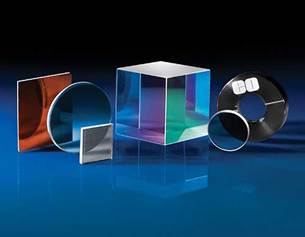
偏振光学元件
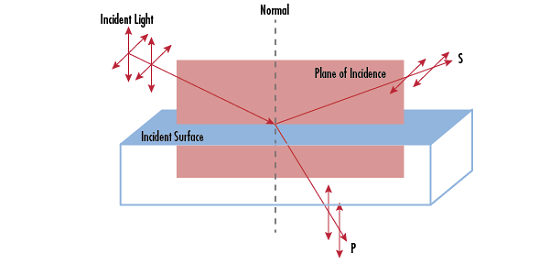
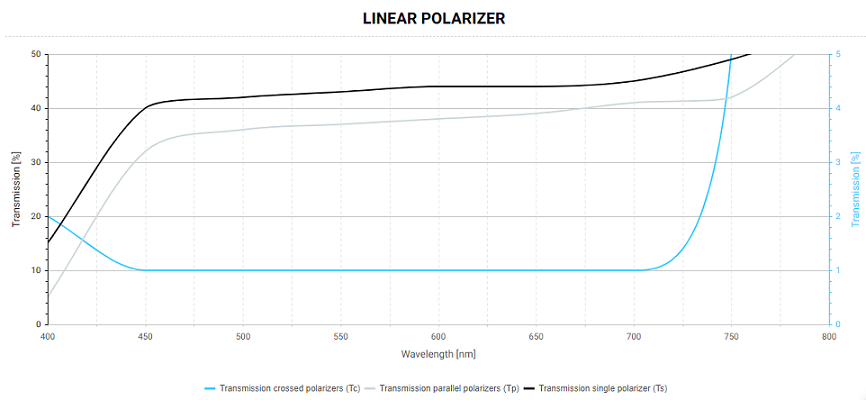
Polarization optics control the orientation of light’s electric field, providing powerful capabilities for a variety of applications. By using components such as polarizers and waveplates to manipulate and measure polarization states, these systems can enhance contrast, reduce glare, and reveal information not accessible through intensity or wavelength alone.
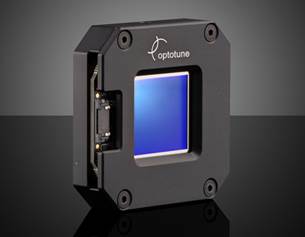
主动光学元件
Active Optical Components utilize electrically driven mechanisms like tunable focusing and adaptive reflection to control illumination and wavefront behavior, simplifying system design. Edmund Optics offers liquid lenses, variable diffusers, speckle reducers, and adaptive optics, providing fast control over focus and aberration correction.
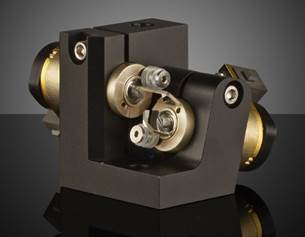
Galvanometers
Steering mirrors and optical scanners enable you to add extra dimensions to your measurements or process samples more efficiently. Samples are often scanned laterally or even axially, creating cross-sections that, when superimposed, provide high-resolution details.
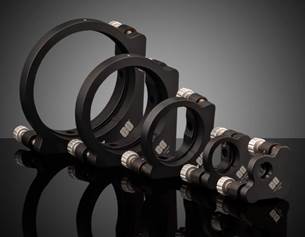
E 系列运动型
光学安装座
Benchtop optical mounts ensure precise positioning for components like lenses, filters, and laser sources. These mounts facilitate easy reconfiguration of encoding elements for hyperspectral setups and other imaging experiments, ensuring consistent optical encodings and reliable system performance.
衍射光学元件
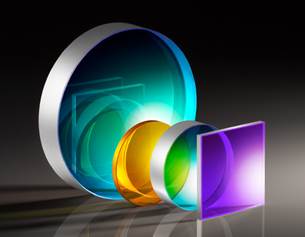
Diffractive Optical Elements (DOE) are manufactured to have microstructure patterns that alter and control the phase of transmitted laser light. By altering the microstructure, a diffractive optical element can produce almost any beam intensity profile or beam shape to meet application requirements. These optical elements are manufactured from various substrates, including plastic, fused silica, germanium, sapphire, and zinc selenide (ZnSe), enabling their use with UV, visible, and infrared (IR) lasers. Diffractive Optics are generally designed for a specific laser wavelength, and their performance is wavelength-dependent.
光圈类
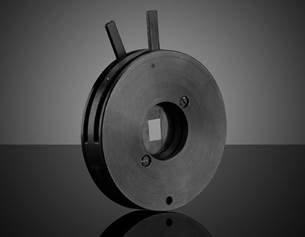
Apertures enhance computational imaging by controlling the light reaching a sensor, thereby improving signal quality and minimizing noise. Researchers can use irises, pinholes, or slits to manage illumination patterns and define constraints for algorithms. Edmund Optics offers adjustable apertures that enable precise control over light throughput and system geometry, enhancing techniques such as coded-aperture imaging and compressive sensing.
衍射光栅
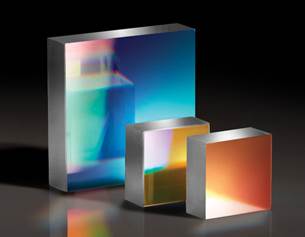
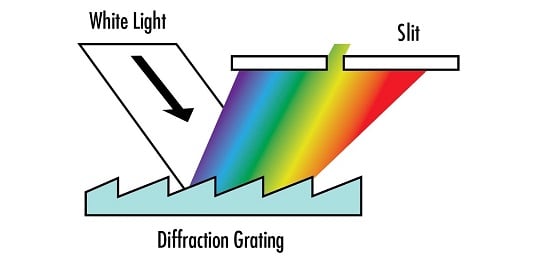
Diffraction gratings support computational imaging by adding a known, wavelength‑dependent encoding to the light field. Algorithms can later invert this encoding. Their controlled dispersion enables snapshot hyperspectral imaging, lensless and holographic reconstruction, and structured‑illumination super‑resolution. Because gratings produce stable and analytically modelable diffraction patterns, they are ideal for systems that rely on accurate forward models. Such systems recover spectral, phase, or high‑resolution information from a single measurement.
特殊透镜
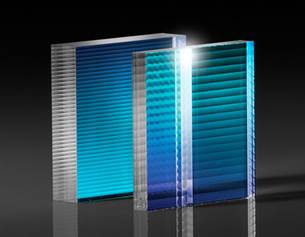
Microlens and multi-lens arrays enhance light-field capture, angular sampling, and point spread functions for depth recovery, refocusing, and snapshot super-resolution. Specialty designs can also increase light collection for low-signal systems, such as hyperspectral cameras. Their engineered optical behavior enables controlled encoding, which supports computational methods to extract richer spatial, spectral, or depth information from limited data.
或查看各区域电话
报价工具
只需输入商品编号
Copyright 2025, 爱特蒙特光学(深圳)有限公司 粤ICP备2021068591号
The FUTURE Depends On Optics®